castle history
Before they were bed and breakfasts
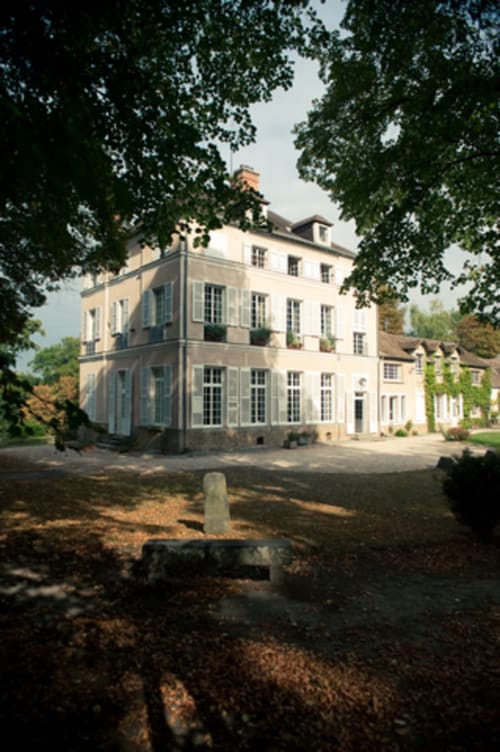
A "three-hundred-year-old" home
The château was built in the late 17th century, 15 years after the Château de Versailles, and given the name "Petit Launay". In fact, this fiefdom, already listed in the 12th century, was rich in springs and marshes, ideal conditions for the development of alders (hence the name "Launay"). Several bourgeois and noble families succeeded one another, including the Languedoc de Roussillon family, then the Puissant family in the 18th century. Marquis Geoffroy de Mesnil Gleizes bought the property in 1815. Following a trip to China, he brought back a statue of the Virgin Mary and placed it in the niche in the gable of the barn on the Route de Chartres (the broken statue has been replaced). He then named the property Château de La Vierge, as it is today, and the street running alongside it was named after him.
In 1852, Château de La Vierge was acquired by the Grisier family, who undertook extensive renovation work.
Gabriel Grisier, the family's son, then took over the estate. An engineer from the Ecole Centrale and a Parisian industrialist, he came to Bures sur Yvette for weekends and vacations. Many friends came to stay in this little corner of paradise, including their dear friends the Dionis du Séjour.
The story goes that the organizers of the Paris World Fair wanted to bring the three-hundred-year-old "octopus" oak in front of the house to the capital. This majestic, listed oak was a real eye-catcher. Fortunately, Mr. Grisier, mayor of Bures from 1890 to 1896, opposed the request!
Gabriel Grisier, the family's son, then took over the estate. An engineer from the Ecole Centrale and a Parisian industrialist, he came to Bures sur Yvette for weekends and vacations. Many friends came to stay in this little corner of paradise, including their dear friends the Dionis du Séjour.
The story goes that the organizers of the Paris World Fair wanted to bring the three-hundred-year-old "octopus" oak in front of the house to the capital. This majestic, listed oak was a real eye-catcher. Fortunately, Mr. Grisier, mayor of Bures from 1890 to 1896, opposed the request!
Edmond Dionis du Séjour, an engineer from the Ecole Centrale and godson of M. Grisier, came to Bures sur Yvette with his parents on a regular basis. On the death of his godfather, he inherited the château in 1916. He died in 1936, and his wife Marie-Thérèse took over the property. His son Jean Dionis du Séjour took over the estate in 1964, followed by his grandson Yves in 2008.
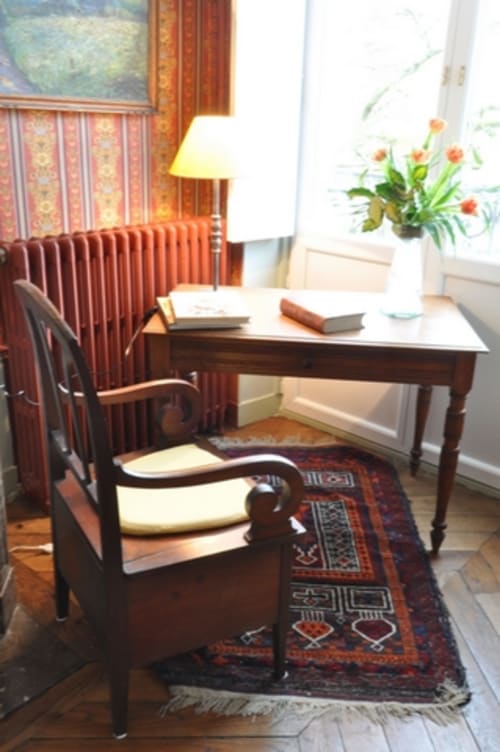
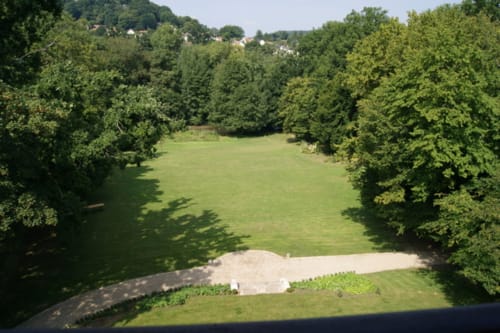
Sculptures, paintings, architecture, agriculture, ... When you stay at Château de la Vierge, you'll feel a special atmosphere. Beyond this 17th-century residence, you'll discover what previous generations have left as the imprint of their talents: oil paintings, sketches, wood and stone sculptures, as well as a pond, a bower where many animals live together..
Sculptures, paintings, architecture, agriculture, ... When you stay at Château de la Vierge, you'll feel a special atmosphere. Beyond this 17th-century residence, you'll discover what previous generations have left as the imprint of their talents: oil paintings, sketches, wood and stone sculptures, as well as a pond, a bower where many animals live together..
A "three-hundred-year-old" home
The château was built in the late 17th century, 15 years after the Château de Versailles, and given the name "Petit Launay". In fact, this fiefdom, already listed in the 12th century, was rich in springs and marshes, ideal conditions for the development of alders (hence the name "Launay"). Several bourgeois and noble families succeeded one another, including the Languedoc de Roussillon family, then the Puissant family in the 18th century. Marquis Geoffroy de Mesnil Gleizes bought the property in 1815. Following a trip to China, he brought back a statue of the Virgin Mary and placed it in the niche in the gable of the barn on the Route de Chartres (the broken statue has been replaced). He then named the property Château de La Vierge, as it is today, and the street running alongside it was named after him.
In 1852, Château de La Vierge was acquired by the Grisier family, who undertook extensive renovation work.
Gabriel Grisier, the family's son, then took over the estate. An engineer from the Ecole Centrale and a Parisian industrialist, he came to Bures sur Yvette for weekends and vacations. Many friends came to stay in this little corner of paradise, including their dear friends the Dionis du Séjour.
The story goes that the organizers of the Paris World Fair wanted to bring the three-hundred-year-old "octopus" oak in front of the house to the capital. This majestic, listed oak was a real eye-catcher. Fortunately, Mr. Grisier, mayor of Bures from 1890 to 1896, opposed the request!
Gabriel Grisier, the family's son, then took over the estate. An engineer from the Ecole Centrale and a Parisian industrialist, he came to Bures sur Yvette for weekends and vacations. Many friends came to stay in this little corner of paradise, including their dear friends the Dionis du Séjour.
The story goes that the organizers of the Paris World Fair wanted to bring the three-hundred-year-old "octopus" oak in front of the house to the capital. This majestic, listed oak was a real eye-catcher. Fortunately, Mr. Grisier, mayor of Bures from 1890 to 1896, opposed the request!
Edmond Dionis du Séjour, an engineer from the Ecole Centrale and godson of M. Grisier, came to Bures sur Yvette with his parents on a regular basis. On the death of his godfather, he inherited the château in 1916. He died in 1936, and his wife Marie-Thérèse took over the property. His son Jean Dionis du Séjour took over the estate in 1964, followed by his grandson Yves in 2008.
Sculptures, paintings, architecture, agriculture, ... When you stay at Château de la Vierge, you'll feel a special atmosphere. Beyond this 17th-century residence, you'll discover what previous generations have left as the imprint of their talents: oil paintings, sketches, wood and stone sculptures, as well as a pond, a bower where many animals live together..
Sculptures, paintings, architecture, agriculture, ... When you stay at Château de la Vierge, you'll feel a special atmosphere. Beyond this 17th-century residence, you'll discover what previous generations have left as the imprint of their talents: oil paintings, sketches, wood and stone sculptures, as well as a pond, a bower where many animals live together..
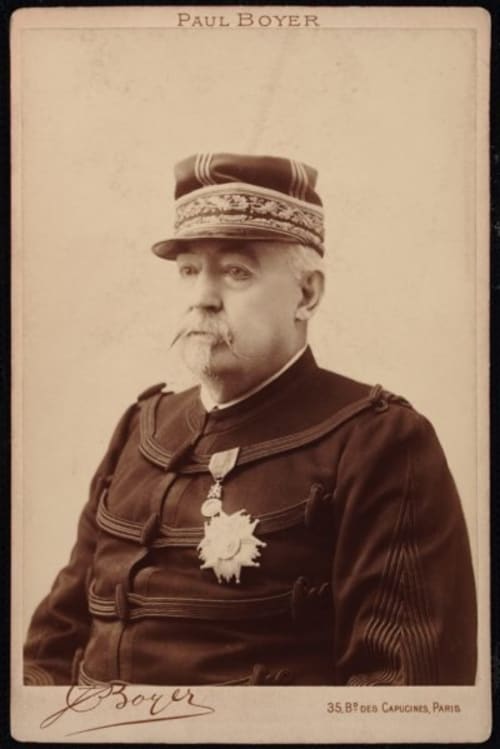
General Saussier, Mr. Grisier's brother-in-law, often came to Bures sur Yvette for rest and family warmth. A Saint Cyrien, awarded the Legion of Honor in 1855, he took part in the Algerian, Italian and Russian campaigns. He then took part in the Mexican campaign.
From 1884 to 1897, he was Military Governor of Paris; in 1887, he was a candidate in the presidential election. A member of the Conseil Supérieur de la Guerre from 1882 to 1902, he was its vice-president from 1889 to 1897. All the military archives of this "generalissimo", his campaigns and his political life in Paris are preserved in our family
General Saussier, Mr. Grisier's brother-in-law, often came to Bures sur Yvette for rest and family warmth. A Saint Cyrien, awarded the Legion of Honor in 1855, he took part in the Algerian, Italian and Russian campaigns. He then took part in the Mexican campaign.
From 1884 to 1897, he was Military Governor of Paris; in 1887, he was a candidate in the presidential election. A member of the Conseil Supérieur de la Guerre from 1882 to 1902, he was its vice-president from 1889 to 1897. All the military archives of this "generalissimo", his campaigns and his political life in Paris are preserved in our family